Haldi Powder: Benefits, Uses and How to Choose Quality Turmeric Powder
Haldi powder, also known as turmeric powder, is one of the most commonly used spices in Indian kitchens. Its bright yellow colour, earthy aroma and distinctive flavour make it an essential ingredient in everyday cooking. From dal and sabzi to curries, rice dishes and traditional recipes, haldi powder is used in a wide variety of Indian foods.
For generations, turmeric has been an important part of Indian culinary traditions. Today, packaged haldi powder makes it convenient for households to use turmeric regularly while maintaining easy storage and measurement.
What Is Haldi Powder?
Haldi powder is a powdered form of dried turmeric rhizomes. Turmeric belongs to the ginger family and has been used traditionally in Indian cooking for centuries.
After suitable turmeric roots are cleaned, dried and processed, they are ground into a fine powder. The resulting turmeric powder is commonly used for its colour, aroma and earthy taste.
A good-quality haldi powder should have a consistent texture, characteristic turmeric aroma and a natural-looking yellow colour.
Why Is Haldi Powder Important in Indian Cooking?
Turmeric is one of the basic spices found in many Indian kitchens. Even a small quantity can add a noticeable colour and flavour to food.
Haldi powder is commonly used in:
- Dal
- Vegetable dishes
- Indian curries
- Rice dishes
- Paneer recipes
- Soups
- Marinades
- Pickles
- Traditional Indian recipes
Its versatility makes turmeric powder an everyday kitchen essential.
Uses of Haldi Powder in Everyday Cooking
1. Dal
A small amount of turmeric powder can be added while preparing dal. It contributes the familiar golden colour associated with many Indian dal recipes.
2. Vegetable Curries
Haldi powder is commonly used in aloo, gobhi, matar, bhindi and other vegetable preparations. It works well with other spices such as coriander powder, cumin and red chilli powder.
3. Rice Dishes
Turmeric can be used in selected rice preparations to provide colour and a mild earthy flavour.
4. Marinades
Haldi powder is often included in marinades for different vegetarian and non-vegetarian recipes along with other spices and ingredients.
5. Traditional Recipes
Many regional Indian recipes use turmeric as part of their traditional spice combinations.
What Makes Good Quality Haldi Powder?
When choosing turmeric powder, consumers should consider several factors.
Consistent Texture
A good packaged turmeric powder should have a reasonably consistent texture that makes it easy to measure and use.
Characteristic Aroma
Fresh and properly stored turmeric powder should have the familiar earthy aroma associated with turmeric.
Natural-Looking Colour
Turmeric naturally has a strong yellow colour. Consumers should consider the product information and packaging when selecting a turmeric powder.
Proper Packaging
Good packaging helps protect spices from moisture, contamination and unnecessary exposure to air.
Manufacturing and Best-Before Information
Always check the manufacturing details, best-before information and other product information before purchasing packaged spices.
Haldi Powder vs Whole Turmeric
Both whole turmeric and turmeric powder have their own uses.
Whole turmeric can be stored and processed before use, while haldi powder is ready to use and can be added directly to recipes.
For everyday cooking, powdered turmeric is convenient because it is easy to measure and mix with other spices.
How Much Haldi Powder Should You Use?
The quantity of turmeric depends on the recipe, serving size and personal taste.
In everyday cooking, a small quantity is generally enough to provide colour and flavour. Using too much turmeric may change the taste of a dish, so it is better to follow the recipe and adjust according to preference.
How to Store Haldi Powder Properly
Proper storage is important for maintaining the aroma, texture and overall quality of turmeric powder.
Follow these simple storage practices:
- Keep the packet or container tightly closed.
- Store it in a cool and dry place.
- Keep it away from direct sunlight.
- Avoid moisture entering the container.
- Always use a clean and dry spoon.
- Keep the spice away from excessive heat.
Proper storage can help preserve the expected quality of the product for longer.
Haldi Powder in Traditional Indian Cuisine
Turmeric is deeply connected with Indian cooking traditions. Different regions use turmeric in different ways depending on local recipes and cooking methods.
From North Indian curries to South Indian preparations and regional vegetable dishes, turmeric continues to be a common ingredient across Indian cuisine.
Its distinctive colour and earthy flavour make it easy to recognize in many traditional dishes.
Haldi Powder and Other Indian Spices
Turmeric is rarely used alone in many Indian recipes. It is commonly combined with other spices to create balanced flavours.
A basic Indian spice combination may include:
Haldi + Red Chilli + Coriander + Cumin + Garam Masala
Each spice contributes a different characteristic:
- Haldi: Colour and earthy flavour
- Red Chilli: Heat and colour
- Coriander: Aroma and balanced flavour
- Cumin: Warm and earthy notes
- Garam Masala: Complex blended flavour
Together, these spices can form the foundation of many everyday Indian dishes.
Why Choose Packaged Haldi Powder?
Packaged turmeric powder can make everyday cooking more convenient.
Instead of cleaning, drying and grinding turmeric at home, consumers can use ready-to-use powder directly in their recipes.
Some advantages include:
- Easy to measure
- Convenient to use
- Simple to store
- Suitable for everyday cooking
- Easy to combine with other spices
Consumers should always check the product label and packaging information before purchasing.
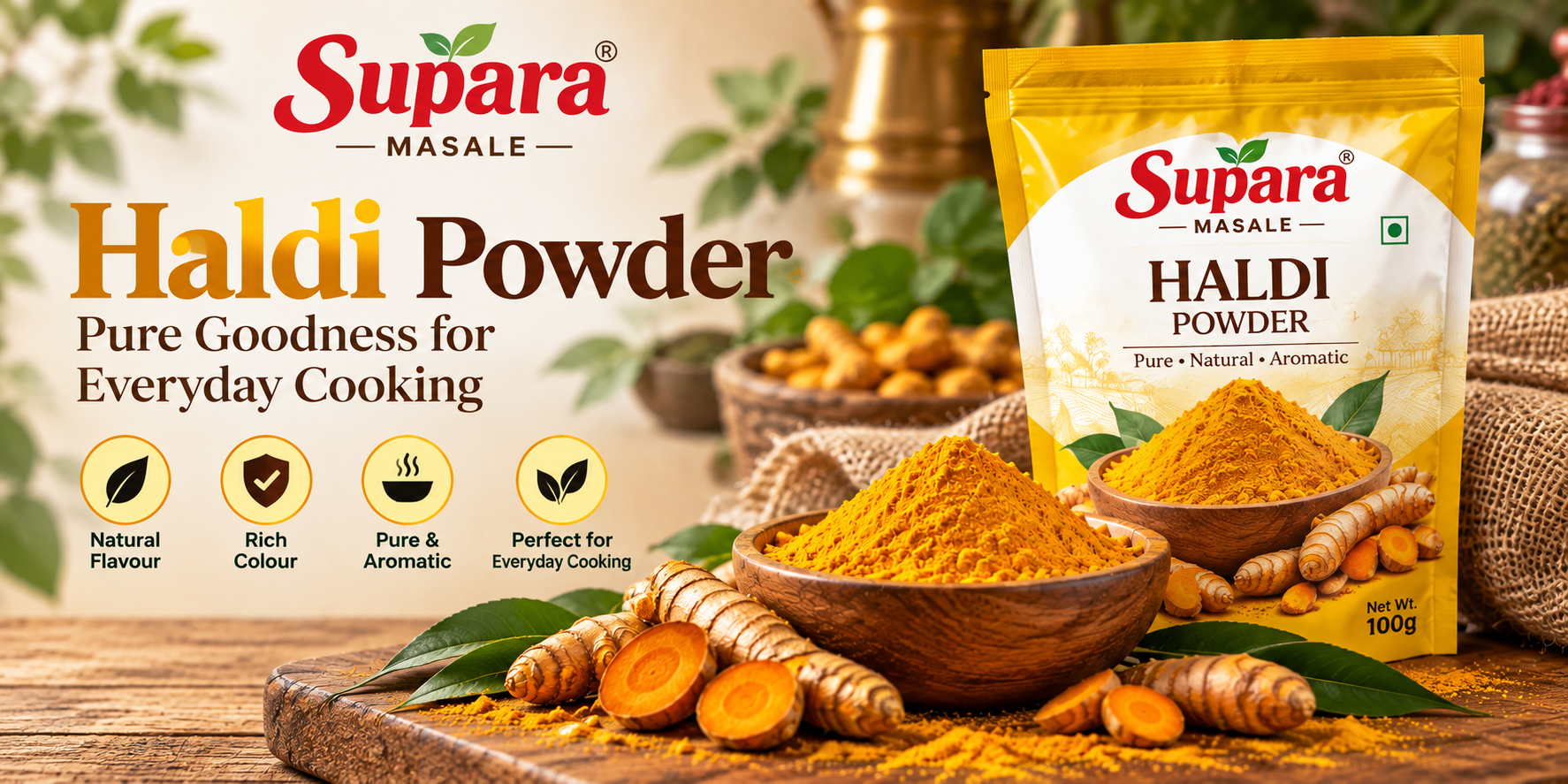
Supara Masala Haldi Powder
Supara Masala focuses on providing spices and masala products suitable for everyday Indian cooking.
Haldi powder is an important part of a regular Indian kitchen because it can be used across a wide range of recipes. From simple dal and sabzi to curries, rice preparations and traditional dishes, turmeric can add familiar colour and flavour to everyday meals.
Supara Masala aims to make commonly used Indian spices convenient for modern kitchens while maintaining the importance of traditional flavours.
How to Use Haldi Powder in Everyday Meals
You can use haldi powder in many simple recipes.
For example, when preparing a basic vegetable dish, turmeric can be combined with cumin, coriander powder, red chilli powder and salt.
For dal, turmeric can be added during cooking and followed by a traditional tempering of spices according to the recipe.
For curries, turmeric can be combined with onions, tomatoes and other spices to create a flavourful base.
The exact quantity depends on the recipe and personal preference.
Frequently Asked Questions About Haldi Powder
What is haldi powder?
Haldi powder is powdered turmeric made from dried turmeric rhizomes. It is widely used in Indian cooking for its colour, aroma and earthy flavour.
What is haldi powder used for?
Haldi powder is commonly used in dal, vegetables, curries, rice dishes, marinades, pickles and many traditional Indian recipes.
Is turmeric powder the same as haldi powder?
Yes. Haldi is the Hindi name commonly used for turmeric, so haldi powder and turmeric powder generally refer to the same spice.
How should haldi powder be stored?
Store haldi powder in a cool, dry place away from moisture, direct sunlight and excessive heat. Keep the packet or container properly closed after use.
Can haldi powder be used every day?
Turmeric is a common everyday cooking spice and is used in many Indian recipes. The appropriate quantity depends on the recipe and individual cooking preferences.
How do I choose good haldi powder?
Look for reliable packaging, clear product information, consistent texture and the characteristic aroma and colour of turmeric. Always check the label and best-before information.
Is whole turmeric better than turmeric powder?
Both have their own uses. Whole turmeric requires additional preparation, while turmeric powder is convenient and ready to use. The choice depends on cooking requirements.
Which spices go well with haldi powder?
Haldi powder commonly works well with coriander powder, red chilli powder, cumin, black pepper and various masala blends.
Final Thoughts
Haldi powder is more than just a yellow spice. It is one of the most familiar ingredients in Indian cooking and has been part of traditional recipes for generations.
Its versatility makes it useful for everyday meals, while its distinctive colour and earthy flavour help give many Indian dishes their familiar character.
Choosing a dependable turmeric powder, storing it correctly and using it in the right quantity can make everyday cooking easier and more consistent.
With Supara Masala Haldi Powder, you can bring the familiar taste and colour of turmeric into your everyday Indian kitchen.
Explore Supara Masala spices and masalas and make your everyday cooking more flavourful and convenient.